Japan’s stifling summer is around the corner. Would you like a cool
breeze, a place to soak your feet in sparkling water, or take a dip in a
waterfall? Without leaving the city? Splash this way.
The Sumiyoshi River, which divides the Hanshin area with the Osaka
dialect traditionally spoken to the east and Kobe dialect to the west,
is concreted like most rivers in Japan, but it is an excellent spot in
summer to cool down and enjoy nature.
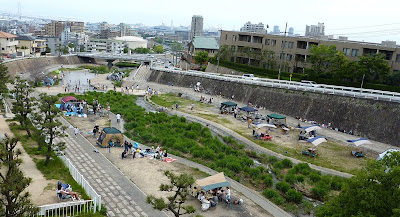
At first glance, it would seem the fast-flowing Sumiyoshi River was
once a large, deep river, but at the turn of last century it was much
shallower, dotted with over 80 waterwheels and prone to flooding. Major
landslides in the area during the Great Hanshin Floods of July 1938
resulted in the death of over 600 people. Depending on your route to the
river, you will see numerous stone memorials for flood victims. The
largest — a guardian god carved into a boulder near the top waterfall —
is also a great spot to enjoy the view. On a fine day, you can see as
far as Wakayama and even Shikoku.
The promenades along the river were originally created in the 1960s
to transport soil from Mt. Sugimori to be used as landfill for Rokko
Island and were nicknamed ‘Dump Truck Road’. After construction was
completed, the ‘roads’ were developed into promenades, with stepping
stones laid at various points across the river, that are used by the
locals for walking, jogging, walking the dog and relaxing. Exercise
areas at either end of the east promenade have hanging bars and other
exercise equipment.
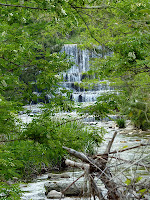
On weekends and holidays, the northern reach of the river is a
popular picnic and barbecue spot. People bring tents, tables and chairs
to knock back a few in the cool river breezes. Since it is shallow and
accessible here, children especially enjoy playing in the river. Adults,
too, cool off in the clean and crystal clear water — some even standing
under the waterfalls then sunbathing nearby. During the summer
holidays, it is not unusual to see parents helping their children with
their summer project — bird watching,
bug catching or fishing in the upper reach of the river, which is the
home to grey herons, ducks, and various species of fish and insects.
In mid-June, Sumiyoshi River is illuminated at night with the
flickering lights of fireflies. Successfully reintroduced in 1996,
firefly larvae from Hiroshima prefecture are released into the river in
November every year by the river association, which holds clean-up
campaigns twice
a year in spring and autumn. The best time to view this beautiful
natural light show is just after dusk, the day after rain, where the
vegetation is thickest. If you do venture behind the guardian monument
to view the fireflies, take a torch, but do not carry a plastic supermarket bag or you may become the target of wild boars.
In July 2008, 70 years after the 1938 floods, the water level of Toga
River to the west rose 1.3m in ten minutes claiming the lives of five
people. Since, Kobe City has installed flood warning lights, which flash
when precipitation in the mountains is heavy, along the rivers.
Various riverside attractions offer those needing to escape the sun
cool refuge. Kikumasamune Sake Museum, on the west bank south of Hanshin
Uozaki, has an excellent display of the traditional sake brewing
process, an English video and sake tasting. Built in 1929, Ishoan,
on the west bank between the Hanshin and JR lines,
was the one-time residence of Junichiro Tanizaki and
the setting of his novel,
The Makioka Sisters. North
of the Hankyu line is the temple-like building housing
the Hakutsuru Fine Art Museum (open in spring and autumn) built in the
1920s, and temples and shrines.
Text & Photos: George Bourdaniotis. Originally published in
Kansai Scene #121, June 2010.


